Monday, March 12, 2012

Hugh's Room, Mar.9

A Friday night drive to Toronto can be a hassle, but going to Hugh's room isn't so bad. You don't have to go all the way in to the city. Lakeshore to Parkside, up to Bloor, along Bloor to Dundas, and free parking at the grocery store. FREE PARKING in TORONTO! WHEW! It's like winning a lottery.
People at home said, "Why not support Hamilton shows? Larry Carlton is playing at Mohawk and Jean-Paul deRoover is at the Pearl." Well...I like Randy Newman I guess.
I do like Randy Newman. While I don't always agree with the stance he takes in his songs, they are so witty and funny, and sharp that they're irresistable to someone who enjoys lyrics. And the music is always so classic. Wonderful chord progressions, even on the transitions, and the mixture of rock band rhythms with Newman's orchestral arrangements separates him from the rest of the pack. He's not just another singer-songwriter with an acoustic guitar (not that there's anything wrong with that).
This time we had a table on the middle level, good view of the stage, but not too close to the stairs. The food was better, and although we were the first to order and last to eat (even after ordering my steak rare) we had a decent dining experience. But this time it was all about the music.
A Man Called Wrycraft organizes four or five of these shows a year, inviting a hand picked collection of Canadian musicians to pay tribute to a songwriter (or band) that he admires. We missed the Carole King show, but caught the Beatles and Tom Waits Tributes. Randy Newman has nearly fifty years of songs to choose from, but people mainly looked to the tremendous series of records he released in the 70s for their choices. Of course the same is true for Randy himself. His latest release Live in London is heavily weighted with older songs.
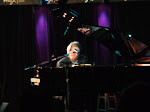
The show began on time at 8:30 as Michael Wrycraft took the stage to introduce the evening and the first performer. Lori Cullen's latest CD features songs 'about rain' by some of the world's greatest songwriters, Randy Newman among them. She led off with "Every Time It Rains" (from Newman's 1999 Bad Love album) accompanied by Dave Matheson on piano. Lori has a beautiful voice, but seemed a bit tentative. Perhaps she simply didn't like being up first. Her performance of "I Think It's Going To Rain Today" was classic and compares with any previous version. Beautiful.
Bassist George Koller followed with a stunning stand-up bass solo to introduce the gorgeous but disturbing "Marie". Koller's plain voice was perfect for this song of a redneck's love for his wife. The unspoken potential for abuse behind the romance was palpable. Koller also did a lovely rendition of "Dayton, Ohio, 1903".
Michael Johnston took the stage to talk about Newman's third album, 1971's Live. This was originally recorded as a promo for radio to introduce Newman to broadcasters, but Warners released it in a cover that looked for all the world like a bootleg. It was, for many of us, our first taste of Randy Newman. Johnston read a note from iTunes which described the record in not very complimentary terms. He then proceeded to lay what they described as the "unremarkable 'Tickle Me'". It was...remarkable. Michael also did "Short People" because, he said, he realized that at home...he was surrounded by them!
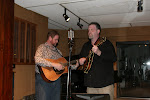
Then it was up to Tim Posgate and his new bluegrass (or newgrass) band the Sorry Cousins who displayed string band proficiency on a couple of numbers including "My Old Kentucky Home". After the smoke cleared from this picking session it was time for a break.
The break allowed folks to buy CDs from all the performers, or Wrycraft's poster for the event and have it signed by one and all.
Treasa Levasseur took the stage and dedicated her first song to Danka behind the bar. "You've Got a Friend in Me" she sang, accompanying herself on the piano, her bluesy voice almost too big for the room. She also covered Newman's poke at the ccreator of the universe..."God's Song" or "That's Why I Love Mankind". Randy better duck if he sees Yahweh coming!
Michael Jerome Browne made the drive from Montreal to do this show, and was a standout singing "Mama Told Me Not To Come" and "Louisiana 1927". His 12 string guitar playing was superb, capturing all of Newman's piano transitions and runs. I watched Wrycraft's face during this set...he was transported. Of course he is always transported. The thing about A Man Called W's tributes is that he just outright loves the music and he always chooses the right artists.
Dave Matheson did a splendid version of "Yellow Man" with all the pseudo-chinese notes that Newman threw in to make it "authentic" and followed that with a beautiful rendition of one of Randy's creepiest songs. "In Germany Before The War" tells the story of a shopkeeper who kills a young girl...influenced by the film M. My wife asked "doesn't Randy Newman write any up-beat songs?" Not many come to think of it!
Jory Nash closed out the night with one of my favourites, dedicated to all "you pyromaniac farmers out there." That's right..."Let's Burn Down the Cornfield." And with that the whole cast was called on stage to perform "Sail Away". This song Newman wrote for a kind of rock opera that was to have featured all the great singer-songwriters of the day. As Randy tells it, "Neil was there, James was there, Elton...everybody." The project came to naught, but this slaver's invitation to "climb aboard little wog sail away with me..." has had a long life and is one of his most evocative songs. The melody and chorus are so singable, that you don't even think about what you're singing about. That is one of the hallmarks of Newman's songwriting, that the singer becomes the person in the song. The redneck who beats his wife, and keeps the n****r down, the child killer, the racist, the rock star, the cowboy. Nobody writes songs like Randy Newman. But on Friday night at Hugh's Room...everybody sang 'em...just right!

Tuesday, January 24, 2012

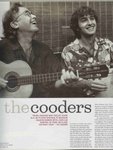
Ry Cooder’s Elegant Indignation (from the New Yorker)

by Alec Wilkinson

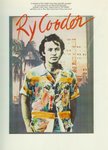
I can’t write briefly about Ry Cooder, the virtuoso guitarist who has a new record, “Pull Up Some Dust and Sit Down.” Admiration for his accomplishments, his singularity, and the longevity and diversity of his career intervene. For more than forty years, since Cooder released his first record, “Ry Cooder,” in 1970, he has been a musician other musicians have followed closely, and no popular musician has a broader or deeper catalog. He has played songs so simple that they are hardly songs, and songs so complex that they would tax, if not overwhelm, the capacities of most lauded guitarists. He had quit making rock ‘n’ roll records sixteen years before Rolling Stone, in 2003, named him the 8th greatest guitarist on their list of the 100 Greatest Guitarists of All Time (three of the seven ahead of him are dead guys). Even so, his influence has been felt more than his records have been heard, with perhaps one exception: the group of elderly Cuban musicians whom he assembled and recorded in 1997 and called the Buena Vista Social Club.

Cooder’s guitar playing is expressive, elegant, and rhythmically intricate. It frequently has a pressured attack that he has described as having the feel of “some kind of steam device gone out of control.” His sense of phrasing was partly imprinted in his childhood by a record of brass music made by a group of African-American men who found instruments in a field left by Civil War soldiers during a retreat, and played them according to their own inclinations. If you wonder what his sensibility sounds like when applied to rock ‘n’ roll—one version of it anyway—the most widely known example I can think of comes from the period when Cooder had been hired to augment the Rolling Stones during the recording of “Let It Bleed.” He was playing by himself in the studio, goofing around with some changes, when Mick Jagger danced over and said, How do you do that? You tune the E string down to D, place your fingers there, and pull them off quickly, that’s very good. Keith, perhaps you should see this. And before long, the Rolling Stones were collecting royalties for “Honky Tonk Women,” which sounds precisely like a Ry Cooder song and absolutely nothing like any other song ever produced by the Rolling Stones in more than forty years. According to Richards in his recent autobiography, Cooder showed him the open G tuning which became his mainstay and accounts for the full-bodied chordal declarations that characterize songs such as “Gimme Shelter,” “Jumpin’ Jack Flash,” “Start Me Up,” and “Brown Sugar.” The most succinct way I can think of to describe the latticed style that Keith Richards says he has sought to achieve with Ron Wood is to say that for thirty-five years the Stones have been trying to do with four hands what Cooder can do with two.

Cooder might have been heard more widely except that he doesn’t like to perform. He doesn’t care for being watched so closely or having to entertain. “I couldn’t go out there anymore and say, ‘Ladies and gentlemen, and especially you ladies,’” he says. The people who like the applause should have it, he feels, but he says he doesn’t care for it. After performing, he used to feel like a withered balloon under a chair on the day after a child’s birthday party. He grew up in recording studios and is more at home there, privately trying to capture something ephemeral and elusive—“the big note,” a friend of his has said, the one that makes all the other concerns fall away. In the last few years, he has toured briefly in Europe and Japan and Australia, with his son, Joachim, playing drums and Nick Lowe playing bass—but not in North America.

For most of Cooder’s career he arranged songs from other writers and various historical sources ranging from Depression era songs, to Bix Beiderbecke’s repertoire, to folk and drifter and cowboy songs, miner’s songs, work songs, surf songs, jukebox songs, calypsos, roadhouse and dance hall songs, protest songs, and songs from the registry of rhythm and blues—but in 2003 he began recording albums of his own material. (My own introductory list of highlights from Cooder’s earlier period: “Great Dreams from Heaven,” “How Can you Keep on Movin’,” “Get Rhythm,” which has a fantastic video, “In a Mist,” “Ditty Wah Ditty,” “Smack Dab in the Middle,” “Tattler,” “France Chance,” “Little Sister,” “Dark at the End of the Street,” “Maria Elena,” “I Think It’s Going to Work Out Fine,” “The Very Thing That Makes You Rich,” and I’ll stop, but I could keep going happily.) The recent records formed a kind of Los Angeles trilogy. The first, “Chavez Ravine.” was inspired by black-and-white photographs of the hill town community inhabited by Mexicans and destroyed to build Dodgers Stadium. The second, “My Name is Buddy,” concerned a red cat named Buddy and his adventures during the most virulent period of anti-workingman and anti-communist feeling. One of the songs he sings is “Red Cat Till I Die.” The third record, “I, Flathead,” is a desert narrative about salt-flat drag racers and an alien racer entangled in a complicated moral dilemma.

What “Pull Up Some Dust and Sit Down” shares with them is an indignation over the economic and ethical disparities of American life and the destructive and scoundrely meanness of the privileges given to the rich. “No Banker Left Behind,” ridicules the considerations extended to the prosperous men and women who grabbed everything not nailed down during the last few years. The norteƱo “El Corrido de Jesse James,” a lampoon of the notion of honor among thieves, has Jesse James, sitting around in heaven, wishing to have his forty-four returned in order to persuade the bankers to “put that bonus money back where it belongs.” In the sleek country rocker “Quicksand,” a Mexican man describes a border crossing during which the guide for his group leaves in the middle of the night, and the man who takes over dies the next day in the sun. “Then a Dodge Ram truck drove down on us / Said I’m your Arizona vigilante man / I’m here to say, You ain’t welcome in Yuma / I’m takin’ you out as hard as I can.”

“Dirty Chateau” is an exchange between a man with a big house and inconsiderate habits and his maid whose people were farm workers. In the reggae shaded “Humpty Dumpty World,” God deplores the insubstantiality of his creation, with its rabble-rousing politicians and craven television commentators. “I thought I had built upon a solid rock / but it’s just a Humpty Dumpty World,” he sings.

“Baby Joined the Army” is a haunting, mesmeric lament by a young man whose simple girlfriend signs up to become a solider. She’s tired of her town and was lured by the assurance that “If I get killed in battle, I still get paid.”

In the trancy moan, “Lord Tell Me Why” a baffled, older working man wonders why, “A white man ain’t worth nothing in this world no more.” And “John Lee Hooker for President” is a hallucinated description by John Lee Hooker of his Presidency, where all the Supreme Court Justices are “fine looking women,” and mealy-mouthed corruption is not tolerated. “I don’t care if you’re Republican or Democratic / Under John Lee Hooker everything’s going to be copastatic”

“I Want My Crown,” sounds cousin-like to some of Cooder’s earlier recordings, among them “Billy the Kid,” and “Money Honey” from “Into the Purple Valley,” released in 1972, in which unlikely ensembles of stringed instruments were invoked more or less the way horn parts usually are. “Republicans changed the lock on the heavenly door / keys to the kingdom don’t fit no more,” and “If there’s a god / I think he’s got to bottle up and go,” Cooder sings. In the twitchy guitar and mandolin crossfire, you can hear a kind of wild and snaky joy, a rarefied strut that seems to be the song’s throbbing heart.

August 30, 2011

Read more http://www.newyorker.com/online/blogs/newsdesk/2011/08/ry-cooder-pull-up-some-dust-and-sit-down.html#ixzz1kPPJFL2c

Friday, January 13, 2012

Andy White at...the Pearl Company


Masterpiece
She's a masterpiece
after all this time
she's gone...

He didn't sing it until about four songs into the second set, but when Andy White began "If I Catch You Crying" last night I watched his hands. I've been stuck on this song since I first heard it on Blackie & the Rodeo Kings BARK album. It's essentially C, F, G...with a "minor fall, and a major lift" but it's intoxicating!
When Andy last played The Pearl Company with Stephen Fearing, I was not able to see them as I had tickets for Jackson Browne at Hamilton Place. Sometimes you have to make these decisions. Remember that night when, in various venues around town, we had to choose from Bill Bourne, Selena Gomez and Tony Bird? Fortunately Andy White made this return engagement. Too bad the crowds that showed up for Valdy didn't appear last night. The twenty or thirty who did make it are glad they did.
Intimate? You bet.
White reminded me of Billy Bragg in his approach both musically and lyrically. One man and a guitar, singing about the politics of government and love. There was a bit of punk rock in the way Andy played that guitar, and a bit of the Guthrie-esque folksinger in the audience singalongs. One thing about the people who go to the Pearl...they're not afraid to sing!
White wore a military-style jacket over a "Where's Waldo" white and black striped shirt. The woman behind me said, "Oh, he's changed his clothes. I liked the scarf better. That shirt shows his tummy!" She'd been there early for the sound check, I think. He quickly covered his 'tummy' with his 12 string guitar, ramped up the echo and fingerpicked the intro for "Looking for James Joyce's Grave".
I recalled my visit to Ireland, sitting at Joyce's desk in his study, or having my photo taken next to the Joyce statue off O'Connell Street. As White sang four or five songs about Ireland it brought back memories of taking the train from Drogheda to Belfast, of martello towers, of the best fish & chips I've ever had, and the pubs. The dark, stained walls and heavy Guinness-soaked atmosphere of the pubs and the loud rock music provided by the local bands.
One complaint I had about last night was the audio mix, usually crisp and clean, it was hard to make out the words. It wasn't White brogue, but either I was sitting too close to the front, or Andy was leaning too far into the mic. My friend Frank remarked about the same thing. And maybe, just maybe, White could go a bit easier on the effects that he pushes his guitar through. While providing a fuller sound, it did tend to muddy things a touch. But these slight problems are nothing compared to the intimacy that is achieved at the Pearl.
White alternated stories with songs and, in fact, many of his songs are stories. "Italian Girls on Mopeds" is a perfect example. "When I Come Back" (from his most recent CD songwriter) touched me, as he sang about "hear[ing] the Beatles for the first time, a hard day's night in '64". I recall well the day I heard the Beatles for the first time, and then I remembered the Hard Day's Night coffeeshop in Ardee. All these memories from 40 or more years flooding together.
That's what songwriters do, they speak to you of shared moments in time and experience. Whether we come from the same geographical area or time zone, or era we share so much.
Music can reach deep into our souls. Had coffee with a guitarist friend who told me that she sold her most recent CD to a woman who played it for her autistic sons. She said it had an amazing impact, it's the only thing they'll listen to. It comes them down, relaxes them. She bought 20 more copies, to give to people at the Autism Society. The principal of their school is playing it over the PA every morning. "Music hath charms to sooth the savage breast". It can also raise our consciousness, bring us to tears, unite us to fight for a common cause...
That's why the Pearl Company, and all who sail in her, are so important.
Bravo!

Tuesday, January 10, 2012

The Pearl Company, again

Friday night my wife and I had dinner at The Bread Bar (an 'earth to table' restaurant on Locke Street) and then went down to The Pearl Company to watch Valdy, a Canadian legend! I call him a legend, but earlier on Friday afternoon Ben Babchishin (a film-maker from out west) had told me the story of pitching a film to the people at Bravo TV. They liked his hour long portrait of Mae Moore and Lester Quitzau and thought it might be the start of a series. He said, "What about Valdy?" The Bravo woman said, "WHO?"

In fact when I told a friend that we were going to see Valdy he said, "Is he still around? He only had that one song didn't he?" "Play me a rock and roll song or don't play me no song at all..." is the song he was thinking of. All of us folksingers (and wannabe folksingers) knew and loved that one. Some of us did "stay home with a big case of beer" but Valdy soldiered on and released a string of successful songs, "Simple Life," "A Good Song," "Peter and Lou," and an album that got played more than any other (except maybe Raffi) in our household Valdy's Kids Record.

More recently he has released a couple of country flavoured CDs with Gary Fjellgaard, and a double disc entitled Viva Valdy! Live at Last. That's how he was on Friday...live at last! Just Valdy and his old Martin guitar playing most of the hits and a wide selection of tunes from his long career, including a handful from a new album not yet released!You could purchase a download card for $10 that allowed you to dump this new collection onto your iPod (more about that later) or you could buy the Viva Valdy set for $20. I think there were even CDs of that infamous kids' record available!

Valdy is an energetic performer, always moving, kinetic. His guitar playing is superlative alternately jazzy and folky, and that '60s Martin rings beautifully, but it's his voice that stands out, this guy can sing.

Someone once quipped that Valdy could sing the Muskoka phonebook and make it entertaining, and in some instances the other night that's essentiallt what he did, if he forgot a lyric he just kept right on going making things up, or continuing a narrative right through the chords. It was a fine example of the folk process in action. Just like Pete Seeger, who doesn't feel successful unless everybody's singing, Valdy led the room in some old folk songs, and in the choruses of his own classic tunes. He encouraged audience participation from the start by quoting Chilliwack's Bill Henderson "if there's no audience / there just ain't no show!" We even got to sing Christmas songs since it was Christmas Eve in the Orthodox calendar! Valdy's last chance to sing his Christmas repertoire 'til next year!

Between sets Valdy moved to the lobby/gallery/merch table, poured himself a cup of java and signed CDs and chatted for the whole break. After that brief respite he again took the stage to do it all over again.

After the show I rushed home to download the new album, only to find that the promised link was nowhere to be found. I looked around his website and located an e-mail address. I sent a short message, and within a few hours Valdy had replied directing me to another location. Not his manager, or his handler, but the man himself replied! The album? It's a goodun. Can't wait to see what the artwork looks like, but the music is just fine!

Tomorrow night...Andy White...at The Pearl Company!

Tuesday, December 6, 2011

Tom Waits Tribute / John Mayall / etc.


OK, it's been a busy time. the last couple of weeks I've been to Hugh's Room for A Man Called Wrycraft's Tribute to Tom Waits, seen Harrison Kenedy and John Mayall at Brock, been to Pickering for a high school production of The Music Man and supported my friend who plays in the Dundas Concert Band. Whew! That's a lot of music, most of it good, some of it excellent.


Hugh's Room is a great venue, but I have to say...they need to fix the kitchen. The menu has been the same forever, and while I used to stick with the salmon one overcooked fish helped me decide to experiment a bit. Well, I tried the Sausage Penne this time and the penne was...not quite al dente, but rather hard! No, I didn't send it back because I had already waited an inordinate amount of time, and was hungry! And the show was starting! I don't like to eat during the show, especially when my seats are pressed up against the stage. Now admittedly these are great seats, right next to the action, but nobody wants to watch people eating pasta while they're trying to sing about strippers and junkies! Big Rude Jake opened and having Coco Framboise do a strip tease dance just took the show to great heights. How could anyone top that?

Elizabeth Shepherd took the challenge by just playing and singing beautifully. Then Ariana Gillis and Band (fresh from a major success in NYC) won over the crowd. Al Parrish, Kim Stockwood, Joe Nolan, and the 24th Street Wailers, everybody was ON tonight. It was wonderful. The songs were dandy too, made everyone go back and revisit Mr. Waits' catalogue when they got home. And the closing act? Matt Brubeck and Roberta Harrison, couldn't have been better. It all wrapped up with a rather sloppy, but appropriate "Ol' 55" by everyone, including the audience. Almost made me forget my pasta...well...the beer helped!


A week later it's Harrison Kennedy opening the show for John Mayall. Kennedy is an acquired taste, going for the authentic, untrained blues-singer thing. He only recently came to the guitar, and seems to have taken that lack of skill to new lows by adding banjko and mandola to the instruments he can't really play. He'd do better with a band, since he still possesses a dynamite voice. But when John Mayall came out the night improved. With Rocky Athas on guitar, Greg Rzab on bass, and drummer Jay Davenport Mayall new band is hot. Add the godfather of British Blues on keyboards and harmonicas and you've really got something. My friends who really didn't know what they were in for said, "Wow, I've never heard anything like that...all his songs are really long." That's because everybody gets to solo, and these guys know their instruments! A good night's entertainment (the food at Grill on the Hill was good too) topped off by a signing in the lobby!


My nephew Andrew Wright was the star of the show at Dunbarton High School's The Music Man. Singing Meredith Wilson's classic songs he was Professor Henry Hill in this high school presentation. The cast was enthusiastic, with a couple of standout performances, and the band was excellent. A surprisingly good production!

The Dundas Concert Band needs to cut their concerts by a third. Their annual Christmas Concert found them tiring after an hour. Some horn players somewhere up there were running out of wind. But the night began with energy and good feelings. Marry Christmas to all, and to all...a good night!