





.jpg)

.jpg)








Friday, August 31, 2012
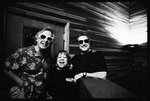
So THAT'S a House Concert!?!

Thursday, July 26, 2012
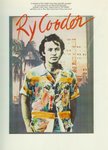
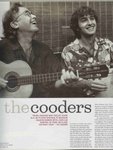
Ry Cooder’s Rabble-Rousing New Album (from The New Yorker)
Originally posted July 25, 2012 by Alec Wilkinson
 Ry Cooder, who over the course of fifty years has become one of the most singular musicians in America, has a new record, “Election Special,” a collection of songs with a political cast, which comes out in August. Cooder is nothing like as well known as he might be, because he would rather do practically anything than perform in public. He established himself initially as a studio musician, playing in private, and in the past decade he has played in public only a handful of times, several of them only as a sideman. “The people who like the applause should have it,” he once said, “I just don’t care for it.” He has appeared so infrequently that a feeling of nervousness has built up around the occasion. What he will meet, he knows, is three rows of guitar players with their camera phones aimed at his hands, and three more rows of wiseasses, saying, “This is supposed to be a great guitar player? How come he’s not shredding?” Remarks like that can go a long way to dampen the pleasure of the occasion for him, especially if the theatre is intimate.
As for his abilities, no other guitar player has mastered the range of styles that Cooder has, or even come close—variations of blues playing (Robert Johnson and Big Bill Broonzy come to mind); slide playing that is sometimes so succinct it is searing; Joseph Spence-style fingerpicking; his own version of electric guitar playing, the most widely known example of which is “Honky Tonk Women,” which Keith Richards based on Cooder’s playing (Cooder was recording with the Stones at the time, on “Let It Bleed,” and Richards wrote the song after listening to him). Cooder’s reach is wide—if you don’t believe me, search Ry Cooder and see all the musicians who list him as an influence. Paul Simon once asked a guitar maker to build him a guitar like Cooder’s—it’s the guitar Simon is holding on the cover of “You’re the One.”
Guitar playing is not the only thing Cooder does, though. He also assembled, rehearsed, picked the repertoire for, and recorded a group of old men in Cuba whom he called The Buena Vista Social Club. The record he made with them was the best-selling in world-music history, and led many musicians and producers to see dollar signs when they looked at Cuba. Cooder’s uncommonness as an artist is the exemplification of Rainer Maria Rilke’s remarks, originally made about Cezanne, “The further one goes, the more private, the more personal, the more singular an experience becomes, and the thing one is making is, finally, the necessary, irrepressible, and, as nearly as possible, definitive utterance of this singularity.”
The songs that Cooder has chosen to record, and his own writings, too, have always had a populist tendency. He likes unions. He likes working men and their lore, detectives, and shadowy parts of Los Angeles, where he has lived all his life. “Election Special” expresses his scorn and outrage about what used to be called current events. “Some of these tunes are a little bitter, I will admit,” he has said. The “Mutt Romney Blues” is sung as if by Romney’s dog, the one he tied on the roof of the car when his family went on vacation. “It don’t look right / don’t seem right,” the dog sings. “Hot in the day / cold all night; Where I’m goin’ I just don’t know / Po’ dog got to bottle up and go.”
“The Wall Street Part of Town,” has a narrator looking for refuge in the part of town where the wind always blows at your back and the ground tilts in your favor. In “Cold Cold Feeling,” Obama is wandering alone, late at night: “I walked up and down the White House / Till I wore the leather out from under my shoes / I didn’t have nothing but the cold cold President blues.” The narrator in “Going to Tampa” is on his way to the convention with ideas in his head. Bring back Willie Horton and scare the nation and blame the Mexicans is one of them.
The record rises to a climax with “Take Your Hands Off It,” Cooder’s rebuke to politicians and their posses, the harm they have caused in the service of greed, and the damage they have done to essential rights around the world. “Get your dirty hands off my Constitution,” it begins, and each verse is a reprimand that spreads like the circles from a stone tossed into a pond. “Get your greasy hands off my Bill of Rights,” and so on, through reproductive rights and war-making. “You don’t speak for God, you know he don’t belong to you.” Pete Seeger believes that songs are more effective as political tools than writing is, because a piece of writing is read once, and songs are sung over and over. A firebrand song is what “Take Your Hands off It” is, a rabble-rousing call, and by the end, you feel all stirred up and ready to close the curtain behind you and pull some levers.
Ry Cooder, who over the course of fifty years has become one of the most singular musicians in America, has a new record, “Election Special,” a collection of songs with a political cast, which comes out in August. Cooder is nothing like as well known as he might be, because he would rather do practically anything than perform in public. He established himself initially as a studio musician, playing in private, and in the past decade he has played in public only a handful of times, several of them only as a sideman. “The people who like the applause should have it,” he once said, “I just don’t care for it.” He has appeared so infrequently that a feeling of nervousness has built up around the occasion. What he will meet, he knows, is three rows of guitar players with their camera phones aimed at his hands, and three more rows of wiseasses, saying, “This is supposed to be a great guitar player? How come he’s not shredding?” Remarks like that can go a long way to dampen the pleasure of the occasion for him, especially if the theatre is intimate.
As for his abilities, no other guitar player has mastered the range of styles that Cooder has, or even come close—variations of blues playing (Robert Johnson and Big Bill Broonzy come to mind); slide playing that is sometimes so succinct it is searing; Joseph Spence-style fingerpicking; his own version of electric guitar playing, the most widely known example of which is “Honky Tonk Women,” which Keith Richards based on Cooder’s playing (Cooder was recording with the Stones at the time, on “Let It Bleed,” and Richards wrote the song after listening to him). Cooder’s reach is wide—if you don’t believe me, search Ry Cooder and see all the musicians who list him as an influence. Paul Simon once asked a guitar maker to build him a guitar like Cooder’s—it’s the guitar Simon is holding on the cover of “You’re the One.”
Guitar playing is not the only thing Cooder does, though. He also assembled, rehearsed, picked the repertoire for, and recorded a group of old men in Cuba whom he called The Buena Vista Social Club. The record he made with them was the best-selling in world-music history, and led many musicians and producers to see dollar signs when they looked at Cuba. Cooder’s uncommonness as an artist is the exemplification of Rainer Maria Rilke’s remarks, originally made about Cezanne, “The further one goes, the more private, the more personal, the more singular an experience becomes, and the thing one is making is, finally, the necessary, irrepressible, and, as nearly as possible, definitive utterance of this singularity.”
The songs that Cooder has chosen to record, and his own writings, too, have always had a populist tendency. He likes unions. He likes working men and their lore, detectives, and shadowy parts of Los Angeles, where he has lived all his life. “Election Special” expresses his scorn and outrage about what used to be called current events. “Some of these tunes are a little bitter, I will admit,” he has said. The “Mutt Romney Blues” is sung as if by Romney’s dog, the one he tied on the roof of the car when his family went on vacation. “It don’t look right / don’t seem right,” the dog sings. “Hot in the day / cold all night; Where I’m goin’ I just don’t know / Po’ dog got to bottle up and go.”
“The Wall Street Part of Town,” has a narrator looking for refuge in the part of town where the wind always blows at your back and the ground tilts in your favor. In “Cold Cold Feeling,” Obama is wandering alone, late at night: “I walked up and down the White House / Till I wore the leather out from under my shoes / I didn’t have nothing but the cold cold President blues.” The narrator in “Going to Tampa” is on his way to the convention with ideas in his head. Bring back Willie Horton and scare the nation and blame the Mexicans is one of them.
The record rises to a climax with “Take Your Hands Off It,” Cooder’s rebuke to politicians and their posses, the harm they have caused in the service of greed, and the damage they have done to essential rights around the world. “Get your dirty hands off my Constitution,” it begins, and each verse is a reprimand that spreads like the circles from a stone tossed into a pond. “Get your greasy hands off my Bill of Rights,” and so on, through reproductive rights and war-making. “You don’t speak for God, you know he don’t belong to you.” Pete Seeger believes that songs are more effective as political tools than writing is, because a piece of writing is read once, and songs are sung over and over. A firebrand song is what “Take Your Hands off It” is, a rabble-rousing call, and by the end, you feel all stirred up and ready to close the curtain behind you and pull some levers.


Monday, July 16, 2012
Jacob Moon
 I had a drink with Jacob Moon the other night. We met at the West Town Tavern and found a booth at the back. They were out of Rickard's White, so JM settled for a pot of tea while I had a Rickard's Blonde. We both made these drinks last a while.
 We talked for a bit about really bad album covers...looking through a book Jacob brought as an ice-breaker. It's those independent vinyl albums of gospel songs that seem to be the worst.
Jacob had some questions about the best way to approach a reviewer with new material. Should he just mail it out, or make an initial request? I think the request is the best route. It's what I prefer. Some people send me an e-mail comparing their music to something they know I like..."My new album sounds like Ry Cooder..." Well, of course it doesn't. It might be influenced by Ry Cooder, or have a mandolin part, or a bottleneck guitar, but it won't sound like Ry Cooder.
Jacob asked, "Okay, who would you compare me to?"
I couldn't think of anyone. Acoustic guitar arrangements, clear tenor voice, melodic songs, maybe some looping...but really I couldn't answer his question. I had been playing his 2005 CD eventide in the car on the way down and had thought about this...it sounded like...Jacob Moon. Sure, I guess you could link him to dozens, hundreds of other troubadours, but that's the cheap way out. First of all he writes songs that are spiritual, singing about God, and it's a God I recognize. He chooses interesting songs to cover, when he does cover a song. On eventide he does a Peter Gabriel song "Come Talk To Me", on landing he covers Paul Simon's "Under African Skies"...not your typical covers by any means. And then there's the most famous thing he's done, a stunning rendition of Rush's "Subdivisions" on 2007's The Loop. Surely you've seen the video on YouTube. Rush were so taken by it they had him perform it for their induction into the Canadian Songwriter's Hall of Fame.

landing is 10 years old this year, and Jacob is celebrating by releasing a newly recorded version of the same set of songs. He thinks it will show how the songs have grown and developed, how his style has matured. Should be out in the fall, and I am looking forward to it. The original was recorded live and the new one was done the same way at a special couple of shows earlier this year.
Jacob likes live recordings, this will be his third. He plays live a lot, he wants to, has to, to maintain his career as a musician. Somewhere I read that he had played in innumerable Indigo/Chapters stores, but is his music suitable for browsing? I've seen people playing in these stores, and wondered how they like doing it. I guess having your audience distracted by the new James Lee Burke book isn't that much different than having them distracted by the lack of Rickard's White on tap tonight.
Listening to Jacob Moon music as I write this I find it beautifully recorded and well-played. I love the sound of the guitar. Sometimes at home I will just pick up a guitar and fingerpick chords and riffs for an hour to relax myself. Music hath charms to sooth the savage breast. We talked about the healing powers of music.
Jacob released a Christmas album in 2007, and it's a gorgeous collection of classic seasonal songs with an added new one from Jacob's pen. His most recent release is the EP Maybe Sunshine from 2009. It's more melodic guitar-based music from a guy who deserves to be heard. Check him out at www.jacobmoon.com
Tuesday, July 10, 2012
Recently...

Monday, June 11, 2012
"The Weight" (what does it all mean?)
 Somebody asked the question about whether the lyrics to "The Weight" were Biblical or not. OK, in fact there was no question...they simply said, "Well that song is all from the Bible, you know!" Sorry...that's not the case.
Even in the Bible there's nobody named "Crazy Chester"! Nazareth, where the story takes place, refers to the town in Pennsylvania about 70 miles north of Philadelphia. In the liner notes for the Across the Great Divide box set, Robbie Robertson (who wrote the song) is quoted as saying that he chose that place because they make legendary Martin Guitars there, so he was aware of the place and been there once or twice. We stopped there on a trip to Pennsylvania, and had a great tour of the Martin Guitar Factory. In fact, if we hadn't got lost three or four times and had arrived when we meant to...we would've run in to Eric Clapton checking out a guitar he was having built!
The characters in the song - Crazy Chester, Luke, Anna Lee, are based on friends of the band. In Levon Helm's autobiography This Wheel's On Fire: Levon Helm And The Story Of The Band, he explained: "We had two or three tunes, or pieces of tunes, and 'The Weight' was one I would work on. Robbie had that bit about going down to Nazareth - Pennsylvania, where the Martin guitar factory is at. The song was full of our favorite characters. "Luke" was Jimmy Ray Paulman. "Young Anna Lee" was Anna Lee Williams from Turkey Scratch. "Crazy Chester" was a guy we all knew from Fayetteville who came into town on Saturdays wearing a full set of cap guns on his hips and kinda walked around town to help keep the peace,if you follow me. He was like Hopalong Cassidy, and he was a friend of the Hawks. Ronnie would always check with Crazy Chester to make sure there wasn't any trouble around town. And Chester would reassure him that everything was peaceable and not to worry, because he was on the case. Two big cap guns, he wore, plus a toupee! There were also "Carmen and the Devil", "Miss Moses" and "Fanny," a name that just seemed to fit the picture. (I believe she looked a lot like Caladonia.) We recorded the song maybe four times. We weren't really sure it was going to be on the album, but people really liked it. Rick, Richard, and I would switch the verses around among us, and we all sang the chorus: 'Put the load right on me!'"
There has been more than a little debate among Classic Rock DJs and enthusiasts over the real meaning of this song [including the enthusiast who brought this up at the swimming pool last week!]. Robertson has insisted time and again there is no biblical subtext, but many people think he may be deflecting. Consider the following:
-the narrator can't find a bed in Nazareth, and the guy to whom he makes an inquiry just smiles and says "no"
-Carmen and the devil were walking side by side, Carmen can go but her friend the devil has to stick around - an allusion to ever-present temptations
-"Crazy Chester followed me and he caught me in the fall" - possible allusion to Paul on the road to Damascus [although...I think the lyric is "caught me in the fog" which rhymes a whole lot better with "take Jack my dog"! And what "allusion to Paul on the road to Damascus"? Saul wasn't 'crazy' and okay, while the Bible does say "he fell to the ground" that's a pretty big stretch to think Crazy Chester alludes to him!]
-the most glaring one: "I do believe it's time to get back to Miss Fanny, you know she's the only one who sent me here with her regards for everyone" - Miss Fanny is the one who sent him to Nazareth, but now it's time for him to go back to her; Miss Fanny is God, the "time" in question is the crucifixion, and "regards for everyone" is Jesus dying for all of man's sins.
That's the most glaring allusion!
That Miss Fanny is GOD?
Yikes!
I think it more likely, and I believe Robbie Robertson would agree with me, that the lyric is a stream of consciousness thing combining characters in and around Woodstock, with some herb-induced creativity, and a little bit of luck. Great song, but not quite as deep as some might like you to believe!
Somebody asked the question about whether the lyrics to "The Weight" were Biblical or not. OK, in fact there was no question...they simply said, "Well that song is all from the Bible, you know!" Sorry...that's not the case.
Even in the Bible there's nobody named "Crazy Chester"! Nazareth, where the story takes place, refers to the town in Pennsylvania about 70 miles north of Philadelphia. In the liner notes for the Across the Great Divide box set, Robbie Robertson (who wrote the song) is quoted as saying that he chose that place because they make legendary Martin Guitars there, so he was aware of the place and been there once or twice. We stopped there on a trip to Pennsylvania, and had a great tour of the Martin Guitar Factory. In fact, if we hadn't got lost three or four times and had arrived when we meant to...we would've run in to Eric Clapton checking out a guitar he was having built!
The characters in the song - Crazy Chester, Luke, Anna Lee, are based on friends of the band. In Levon Helm's autobiography This Wheel's On Fire: Levon Helm And The Story Of The Band, he explained: "We had two or three tunes, or pieces of tunes, and 'The Weight' was one I would work on. Robbie had that bit about going down to Nazareth - Pennsylvania, where the Martin guitar factory is at. The song was full of our favorite characters. "Luke" was Jimmy Ray Paulman. "Young Anna Lee" was Anna Lee Williams from Turkey Scratch. "Crazy Chester" was a guy we all knew from Fayetteville who came into town on Saturdays wearing a full set of cap guns on his hips and kinda walked around town to help keep the peace,if you follow me. He was like Hopalong Cassidy, and he was a friend of the Hawks. Ronnie would always check with Crazy Chester to make sure there wasn't any trouble around town. And Chester would reassure him that everything was peaceable and not to worry, because he was on the case. Two big cap guns, he wore, plus a toupee! There were also "Carmen and the Devil", "Miss Moses" and "Fanny," a name that just seemed to fit the picture. (I believe she looked a lot like Caladonia.) We recorded the song maybe four times. We weren't really sure it was going to be on the album, but people really liked it. Rick, Richard, and I would switch the verses around among us, and we all sang the chorus: 'Put the load right on me!'"
There has been more than a little debate among Classic Rock DJs and enthusiasts over the real meaning of this song [including the enthusiast who brought this up at the swimming pool last week!]. Robertson has insisted time and again there is no biblical subtext, but many people think he may be deflecting. Consider the following:
-the narrator can't find a bed in Nazareth, and the guy to whom he makes an inquiry just smiles and says "no"
-Carmen and the devil were walking side by side, Carmen can go but her friend the devil has to stick around - an allusion to ever-present temptations
-"Crazy Chester followed me and he caught me in the fall" - possible allusion to Paul on the road to Damascus [although...I think the lyric is "caught me in the fog" which rhymes a whole lot better with "take Jack my dog"! And what "allusion to Paul on the road to Damascus"? Saul wasn't 'crazy' and okay, while the Bible does say "he fell to the ground" that's a pretty big stretch to think Crazy Chester alludes to him!]
-the most glaring one: "I do believe it's time to get back to Miss Fanny, you know she's the only one who sent me here with her regards for everyone" - Miss Fanny is the one who sent him to Nazareth, but now it's time for him to go back to her; Miss Fanny is God, the "time" in question is the crucifixion, and "regards for everyone" is Jesus dying for all of man's sins.
That's the most glaring allusion!
That Miss Fanny is GOD?
Yikes!
I think it more likely, and I believe Robbie Robertson would agree with me, that the lyric is a stream of consciousness thing combining characters in and around Woodstock, with some herb-induced creativity, and a little bit of luck. Great song, but not quite as deep as some might like you to believe!
Thursday, May 31, 2012
To Hear Doc Watson, You Really Had to See Him
This appreciation of Doc Watson by Ry Cooder appeared in the New York Times artsbeat blog.
 Doc Watson, who died on Tuesday at age 89, was the first truly great guitar player I ever saw up close. For me, growing up in Santa Monica, Calif., in the 1950s meant that great musicians were only manifested on records and radio, making it hard to catch a glimpse of the person behind the layers of sound and presentation. You knew people like Hank Snow and Merle Travis were great, but you couldn’t be sure how much the Nudie suits and custom boots had contributed to the sound you heard on KXLA radio.
Then, Doc and the banjo player Clarence Ashley and some of the boys drove out to Los Angeles for the first U.C.L.A. Folk Festival in 1963. On the lawn by Royce Hall, the gothic classical music venue, they gathered around and sang “Daniel Prayed,” an intricate call-and-response-style gospel tune. The public was here and there, wandering around aimlessly, like they do at these events. It was casual and unannounced — we hadn’t entered into the hyperorganized way of music appreciation just yet — that came later with the big rock shows.
Fred Price led the song with his old man’s ghostly voice, Clint Howard joined in on farm-boy tenor and Doc added his resonant bass, which was severe and shocking. In their tradition, the instruments are rested and the song is like a breathing exercise. Daniel prayed every morning, noon, and night, it says. I wondered if there were more people right there on the lawn than had ever assembled in their church back home in Deep Gap, N.C., to hear about Daniel and the nonstop prayer, but that didn’t bother Doc and the boys.
Then, Ed Pearl, the owner of the folk music club the Ash Grove, took them away somewhere to get a sandwich. Their place back home would probably just about fit in between the lawn and the food tent, I remember thinking. I also remember thinking that these men know something about music I’ll never know, even if I practice and study all my life. You have to be born into it. That way, every note and word and gesture has meaning, and your notes and sung words line up with those of your friends and make a whole statement about life that is tiny but eternal. Now another rounder has gone. Doc made many good recordings, but you needed to be in his close presence to pick up the sound of his life and times; the microphone can’t do that for you, I’m sorry to say.
Later that day, I was sitting on a bench playing guitar, and Doc and Ed Pearl walked by. Doc stopped and listened. “Who’s that?” he asked Ed. “That’s Ry Cooder, he’s a youngster.”
“Sounds pretty good,” Doc said, and they walked on.
Doc Watson, who died on Tuesday at age 89, was the first truly great guitar player I ever saw up close. For me, growing up in Santa Monica, Calif., in the 1950s meant that great musicians were only manifested on records and radio, making it hard to catch a glimpse of the person behind the layers of sound and presentation. You knew people like Hank Snow and Merle Travis were great, but you couldn’t be sure how much the Nudie suits and custom boots had contributed to the sound you heard on KXLA radio.
Then, Doc and the banjo player Clarence Ashley and some of the boys drove out to Los Angeles for the first U.C.L.A. Folk Festival in 1963. On the lawn by Royce Hall, the gothic classical music venue, they gathered around and sang “Daniel Prayed,” an intricate call-and-response-style gospel tune. The public was here and there, wandering around aimlessly, like they do at these events. It was casual and unannounced — we hadn’t entered into the hyperorganized way of music appreciation just yet — that came later with the big rock shows.
Fred Price led the song with his old man’s ghostly voice, Clint Howard joined in on farm-boy tenor and Doc added his resonant bass, which was severe and shocking. In their tradition, the instruments are rested and the song is like a breathing exercise. Daniel prayed every morning, noon, and night, it says. I wondered if there were more people right there on the lawn than had ever assembled in their church back home in Deep Gap, N.C., to hear about Daniel and the nonstop prayer, but that didn’t bother Doc and the boys.
Then, Ed Pearl, the owner of the folk music club the Ash Grove, took them away somewhere to get a sandwich. Their place back home would probably just about fit in between the lawn and the food tent, I remember thinking. I also remember thinking that these men know something about music I’ll never know, even if I practice and study all my life. You have to be born into it. That way, every note and word and gesture has meaning, and your notes and sung words line up with those of your friends and make a whole statement about life that is tiny but eternal. Now another rounder has gone. Doc made many good recordings, but you needed to be in his close presence to pick up the sound of his life and times; the microphone can’t do that for you, I’m sorry to say.
Later that day, I was sitting on a bench playing guitar, and Doc and Ed Pearl walked by. Doc stopped and listened. “Who’s that?” he asked Ed. “That’s Ry Cooder, he’s a youngster.”
“Sounds pretty good,” Doc said, and they walked on.

Thursday, May 10, 2012
Gregg Allman blues...
Just got a cancellation notice from the place where I bought the signed Gregg Allman bio. According to an email the publisher discovered that their inventory of signed copies was depleted...meaning...no signed Gregg Allman book! #$%^!
 I guess I'll just buy the e-version and save myself some money. The e-book edition of Buddy Guy's new one looks really good on the iPad!

Subscribe to:
Posts (Atom)